
Foreign Affairs
The world we live in is largely the result of immense American efforts on the international stage over the past 75 years. American preeminence began in World War II, came of age during the Cold War, and persists today despite the follies of our post-Cold War unipolar moment and growing challenges from Moscow and Beijing. Our record is not perfect, but the United States has been a tremendous force for good in the world. We should not be the world’s policeman and must better align our finite resources with the most pressing challenges to our national interests, but disengagement and ceding sovereignty to international governmental organizations are not the answers either. We must put our fiscal house in order, preserve and strengthen our alliances, and maintain a decisive military deterrent.
As a member of the Senate Committee on Foreign Relations from 2013 to 2022 and Chairman/Ranking Member of the Subcommittee for Europe and Regional Security Cooperation, I saw what happens when the United States is perceived as either weak, disengaged, or both. I also saw what happens when the United States pursues geopolitical adventures beyond the remit of its vital national interests. The catastrophe in Ukraine is a tragic example. Post-Soviet U.S. policy in Eastern Europe vacillated between reckless assertions of influence—calling for NATO expansion into Georgia and Ukraine in 2008—and periods of disinterest and wishful thinking regarding Russian intentions in the region—Obama’s “Russian reset” in 2009-2013. In essence, we first alarmed an already resurgent, revanchist Russia and then presented it with a gaping power vacuum. Vladimir Putin was all too willing to fill it, and Ukraine has paid a terrible price.
U.S. foreign policy must reestablish coherence between our vital interests and the resources in which we invest to secure them. There is broad bipartisan consensus that the People’s Republic of China is by far the greatest foreign threat currently facing the United States. Unfortunately, there is less recognition that our unsustainable debt and deficit spending are even more fundamental threats to our security. This year, for the first time, the cost of servicing our debt exceeded what we spend on defense, a threshold that has historically heralded the decline of powerful nation-states. That leaves us with two broad objectives: first, we must balance our budget and reduce our debt, and second, we must better focus our resources on deterring Beijing.
It is important to refrain from partisan politics in foreign affairs, and I support the president’s international initiatives whenever possible, regardless of which party is in the White House. That said, the Constitution divides foreign policy-making power between the president and the Senate. The president is the primary actor on the international stage, but the Senate was given shared authority over treaties and the diplomatic recognition of other states. When the president pursues international agreements that are at odds with American values and tradition or would be opposed by a majority of the American people, the Senate has a responsibility to check the executive branch. The Kyoto Protocol on Climate Change, the U.N. Conference on the Arms Trade Treaty, the U.N. Convention on the Law of the Sea Treaty, the Paris Agreement on climate, and the recent World Health Organization Pandemic Agreement are prime examples. International accords of such magnitude should be regarded as treaties requiring two-thirds of the Senate for passage, and I have spearheaded multiple efforts to assert the Senate’s prerogative in such matters. I will continue to work to ensure that the Senate does not abrogate its constitutional duty.
Foreign relations activities and legislation I have sponsored or cosponsored:
-
-
- S. 1983 No WHO Pandemic Preparedness Treaty Without Senate Approval Act – a bill deeming any WHO pandemic preparedness agreement a treaty requiring Senate advice and consent.
- S. 472 (118th) – a bill deeming any agreement relating to Iran’s nuclear program a treaty requiring Senate advice and consent.
- S. 1441 (116th) – a bill imposing sanctions designed to prevent completion of the Nord Stream 2 pipeline.
- S. Res. 27 (116th) — A resolution calling for a prompt multinational freedom of navigation operation in the Black Sea and urging the cancellation of the Nord Stream 2 pipeline.
- Led numerous Congressional delegations to Ukraine and the Balkans aimed at strengthening transatlantic relations.
- Was the only U.S. Senator to attend Volodymyr Zelensky’s inauguration as President of Ukraine.
- Congressional Representative to the 69th, 71st, and 73rd UN General Assembly Sessions.
-
Related News

ICYMI: Johnson Discusses Situation in Israel on MSNBC
Earlier today, Senator Johnson discussed the situation in Israel on MSNBC's The Daily Rundown with Chuck Todd.Watch full clip here. Related articles:Milwaukee Journal Sentinel Wisconsin Sen....
Murphy, Johnson Introduce Resolution to Condemn Downing of Malaysia Airlines Flight 17
WASHINGTON - In wake of the tragic Malaysia airlines plane crash last week, U.S. Senator Chris Murphy (D-Conn.), Chairman of the Foreign Relations Subcommittee on European Affairs, and U.S. Senator...
Johnson Joins U.S. Delegation to Ukraine
Washington, D.C. - Sen. Ron Johnson made the following remarks about his trip to Ukraine for the inauguration ceremonies: "I was happy to join Vice President Biden's delegation at the...
Johnson, Murphy Introduce Bipartisan NATO Alliance Act
Washington, D.C. - Sen. Ron Johnson (R-Wisconsin) and Sen. Chris Murphy (D-Connecticut) on Thursday introduced the bipartisan NATO Alliance Recognition and Promotion Act.The bill encourages enhanced...
Murphy, Johnson Resolution Condemns Turkish Government for Blocking Twitter, Stifling Free Speech
WASHINGTON—U.S. Senator Chris Murphy (D-Conn.), Chairman of the Foreign Relations Subcommittee on European Affairs, and U.S. Senator Ron Johnson (R-Wisc.) Ranking Member of the Foreign Relations...
Johnson Statement on Ukraine Relief Bill
Washington, D.C. - Sen. Johnson made the following comments today regarding his vote on the Ukraine relief bill. "To counter Vladimir Putin's aggressive actions, it is crucial for America...
Johnson, Cruz, Inhofe, Vitter, Sessions, Cornyn, Barrasso, Lee File Amendment to Remove IMF Changes
Washington, DC - Senators Ron Johnson of Wisconsin, Ted Cruz of Texas, James Inhofe of Oklahoma, David Vitter of Louisiana, Jeff Sessions of Alabama, John Cornyn of Texas, John Barrasso of Wyoming...
Senate Foreign Relations Committee Members Urge President Obama to Assist Peaceful, Democratic Transition in Ukraine
Warn of Russia’s “Provocative and Dangerous Tactics” that Undermine Ukraine’s Unity WASHINGTON -In a letter to President Barack Obama, U.S. Senators Robert Menendez, D-N.J., Bob Corker, R-Tenn.,...
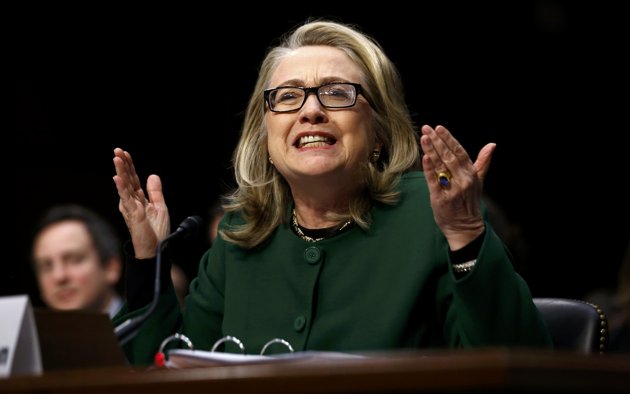
Johnson: One Year Later, It Makes A Difference
Washington, D.C. - Senator Johnson made the following comments on the anniversary of the Benghazi hearings and the infamous question posed by Secretary Clinton: "What difference at this point...
Johnson Urges Committee to Continue Investigation into Benghazi Attacks
"It is now exactly one year since the terrorist attacks in Benghazi, Libya, that took the lives of four brave Americans. It has been a year since those attacks killed Ambassador Christopher Stevens...